Part I
What Changed Around Childhood
- The Convenient Childhood
- Products That Do Not Want to Be Put Down
- Why the Screen Became the Easy Answer
- What Digital Life May Be Replacing
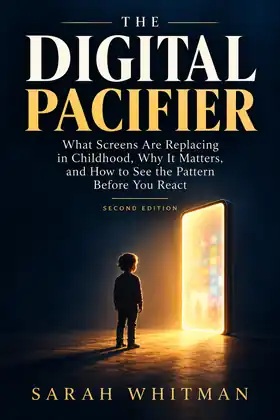
Rebuilt 2026 Edition
What Screens Are Replacing in Childhood, Why It Matters, and How to See the Pattern Before You React
A practical, evidence-informed guide for parents who want to understand difficult screen habits without panic, guilt, or one-size-fits-all explanations.
“The screen is visible. The pattern around it is what you need to understand.”
Available on Amazon Kindle · Published under the pen name Sarah Whitman
The rebuilt edition does not assume that every difficult ending means addiction, that every screen has the same effect, or that one daily minute limit fits every child. It asks you to observe the actual child, the actual platform, the actual household, and the actual consequences before deciding what needs to change.
Inside the rebuilt edition
Part I
Part II
Part III
The book distinguishes association from causation, avoids invented clinical explanations, and points parents toward qualified professional guidance when concerns involve persistent changes in sleep, mood, school, relationships, safety, or everyday functioning.
Read our sources & editorial standards